News
Design Selections Made Simple: A Step-by-Step Walkthrough
Design selections can be the most exciting part of the build—and the most overwhelming. This guide walks you through a clear, step-by-step order for choosing finishes, with practical tips so you don’t get stuck in decision fatigue.

What “Design Selections” Actually Include
When builders talk about design selections, they mean the choices that determine your home’s look and the day-to-day experience of living in it.
Common selection categories:
- Exterior finishes (brick/siding, paint color, roofing, doors)
- Interior surfaces (wall paint, trim style, flooring, tile)
- Kitchen and baths (cabinetry, countertops, fixtures)
- Lighting and electrical (fixture styles, added outlets, switches)
- Hardware and details (cabinet pulls, door levers, mirrors)
Design Selections Timeline: The Smart Order to Choose Things
If you choose in the wrong order, you’ll second-guess everything. If you choose in the right order, decisions get easier because each step narrows the funnel.
Selection Sequence Table (What to Choose First)
| Step | Choose This | Why It Comes First |
|---|---|---|
| 1 | Structural + layout choices | Impacts framing, rough-ins, and cost |
| 2 | Flooring + tile direction | Big surfaces set the tone for the entire home |
| 3 | Cabinetry | Color and style influence everything around it |
| 4 | Countertops | Must coordinate with cabinets and backsplash |
| 5 | Paint + trim | Pulls the palette together and affects lighting feel |
| 6 | Fixtures + hardware | Final layer—ties style together without rework |
Step-by-Step Walkthrough: How to Make Finish Choices Without Overwhelm
Step 1: Start With Your “Style Sentence”
Before you pick anything, define a simple direction. One sentence is enough.
Examples:
- “Warm modern with light oak tones and black accents.”
- “Coastal classic: soft whites, sandy neutrals, brushed nickel.”
- “Clean traditional: white cabinets, warm wood floors, simple trim.”
This prevents the most common mistake: mixing too many styles and calling it “eclectic.”
Gulf Coast note: Coastal light is bright and reflective. Soft whites and warm neutrals often feel calmer in strong daylight than harsh, cool whites.
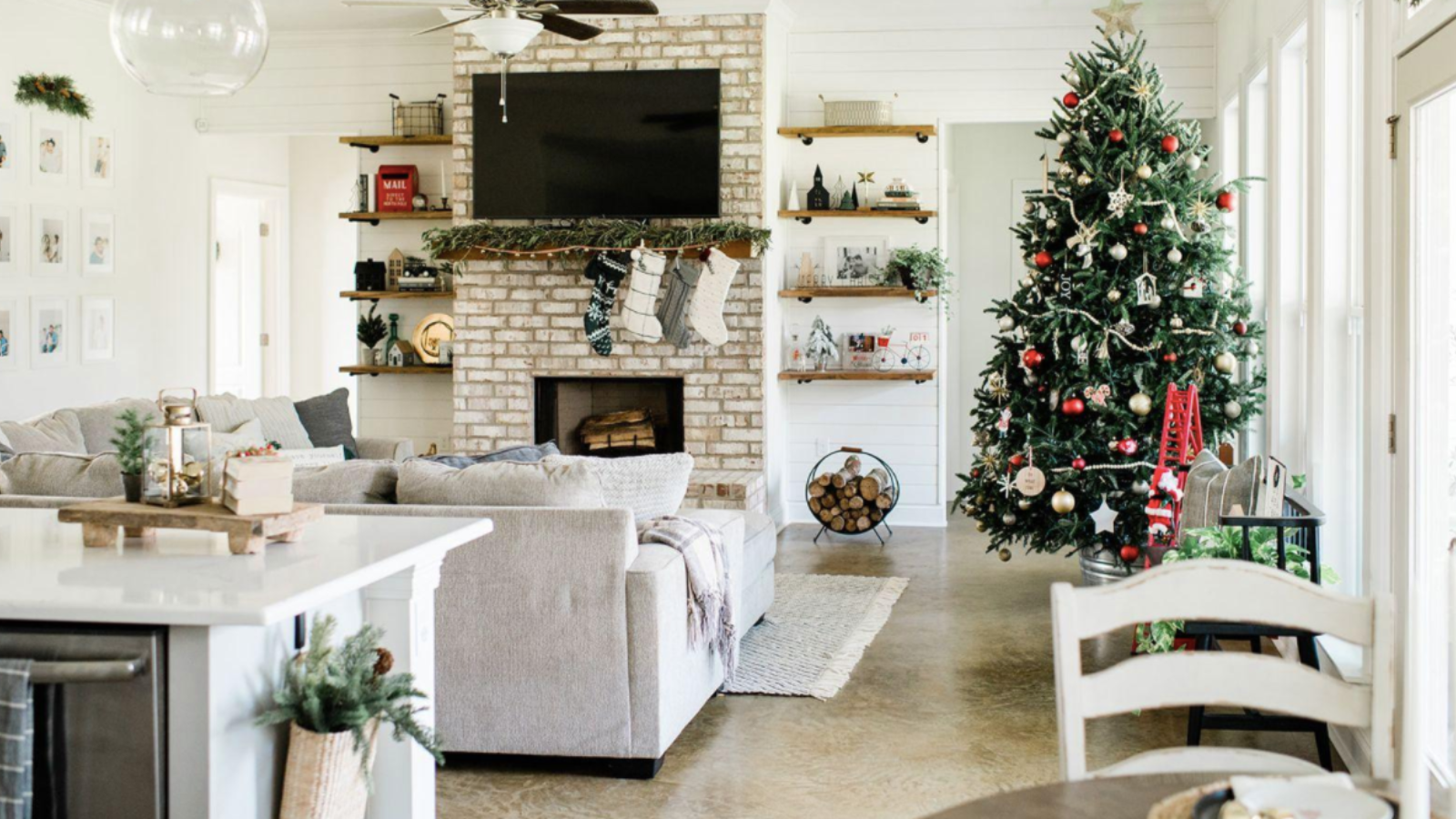
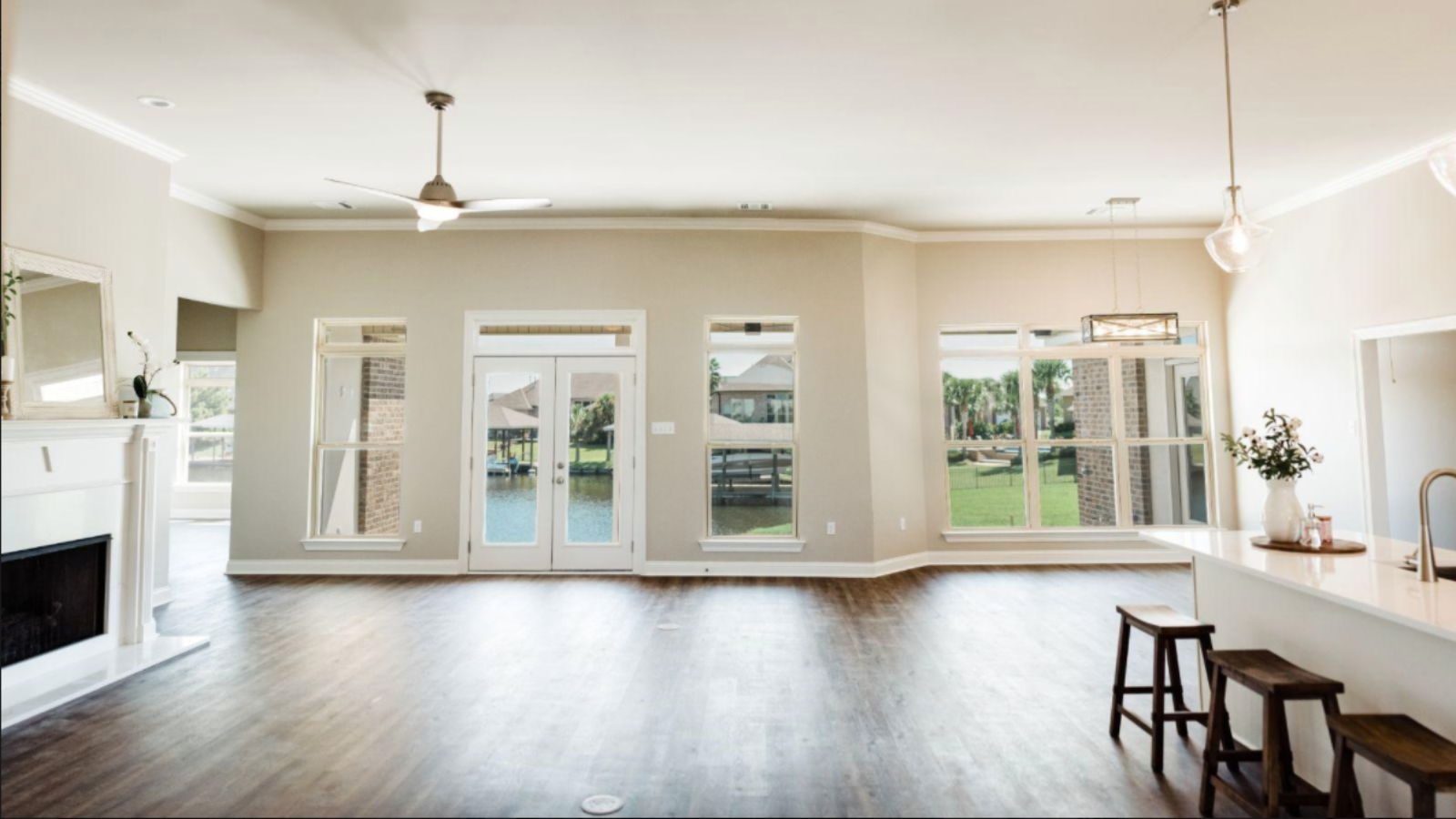
Step 2: Pick Flooring First (The Biggest Visual Surface)
Flooring drives the entire palette because it covers so much square footage.
Good decision rules:
- Keep one main flooring type through main living areas for a cleaner look.
- Choose a practical texture/finish that hides daily life (pets, kids, sand).
- In wet zones (mudroom, laundry, baths), prioritize slip resistance and easy cleaning.
Gulf Coast note: Humidity and tracked-in sand are real. Ask about finishes and cleaning routines that hold up well over time.
Step 3: Choose Tile With a “Repeat Strategy”
Tile feels complicated because there are endless options. A repeat strategy simplifies it fast.
Simple approach:
- Pick one shower wall tile for most baths.
- Pick one shower floor tile that coordinates.
- Choose one backsplash look (kitchen) that works with your counters.
- Add personality with a single “moment tile” (powder bath or laundry).
Result: you get cohesion without losing style.
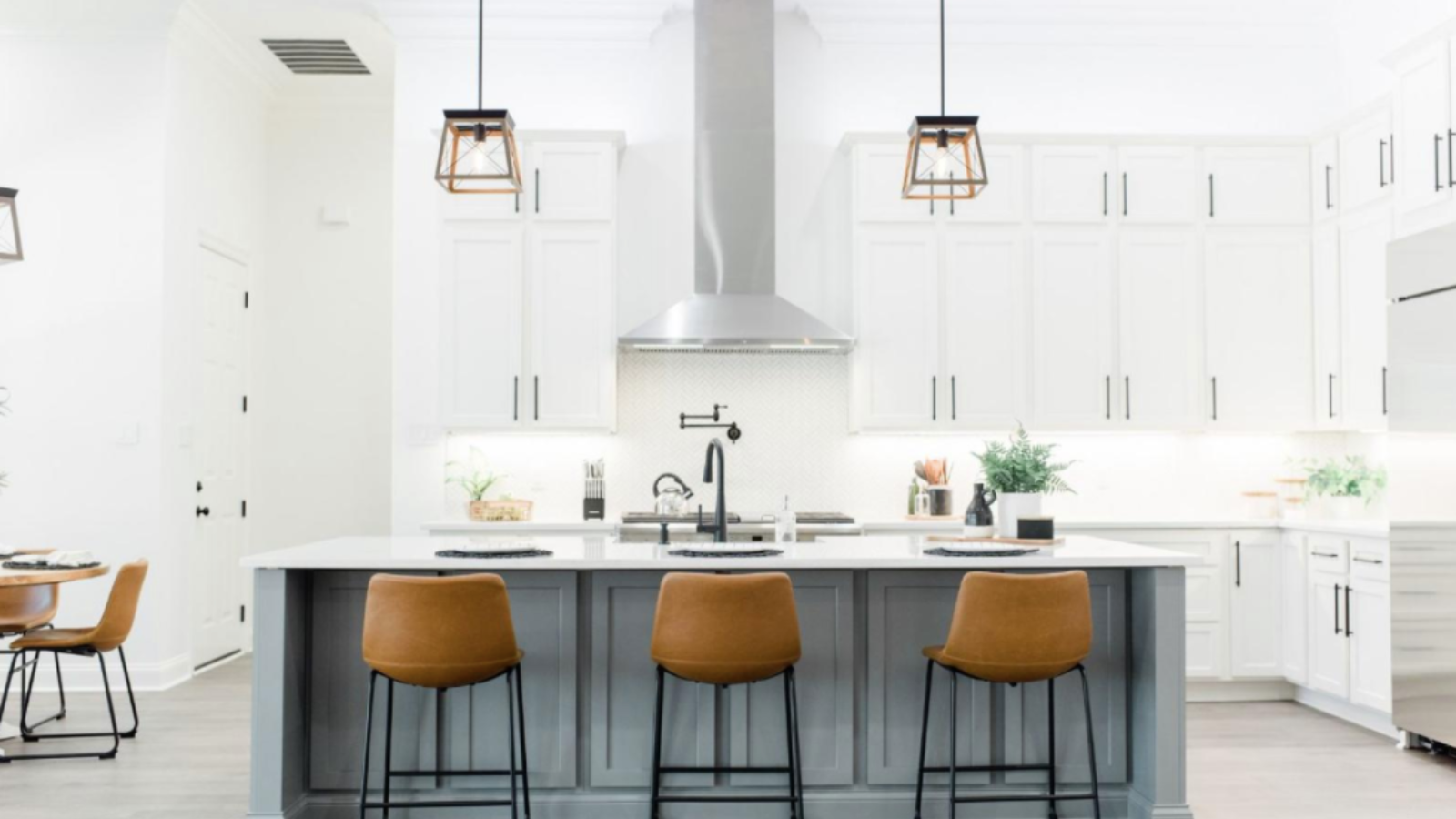
Step 4: Cabinetry (Where Most Homes Get Their Personality)
Cabinetry is a major investment and a major style driver.
Make these decisions:
- Door style: shaker vs. slab vs. raised panel
- Color: light, medium, dark, or two-tone
- Function: trash pullout, tray dividers, spice pullouts, soft-close, etc.
Practical rule: Choose cabinets for function first (storage and layout), then style. You use them every day.
Step 5: Countertops (Coordinate, Don’t Compete)
Countertops should complement cabinetry—not fight it.
Easy matching rules:
- If cabinets have strong wood grain, go simpler on countertop pattern.
- If cabinets are plain (solid color), you can add more movement in the countertop.
- Match undertones: warm with warm, cool with cool.
For families: Ask about durability and maintenance. Some surfaces are more “wipe and go” than others.
Step 6: Paint and Trim (The “Unifier”)
Paint is where your home becomes cohesive.
Simple system:
- Choose one main wall color for most of the home.
- Choose one trim color (often a crisp white).
- Use 1–2 accent colors strategically (not everywhere).
Tip: Sample paint in your lighting. Gulf Coast sunlight can make colors look different than they do in a store.
Step 7: Fixtures, Lighting, and Hardware (The Finishing Layer)
This is where you can add polish without reinventing the whole palette.
Keep it simple:
- Pick one metal finish for most of the home (brushed nickel, matte black, etc.).
- Allow one secondary finish in limited areas if desired (example: black lighting, nickel plumbing).
- Repeat the same style family (modern, coastal, classic).
Checklist: Bring This to Your Design Meeting
Use this list to speed up decisions and avoid “we’ll circle back” fatigue.
Design Selections Prep Checklist:
- Your “style sentence” (one-line direction)
- 8–12 inspiration photos (kitchen, bath, exterior, flooring)
- Flooring preference (type, color tone, texture)
- Cabinetry direction (style + color range)
- Countertop preferences (2–3 favorites)
- Tile approach (repeat strategy + one accent area)
- Lighting style direction (modern, coastal, classic, etc.)
- Hardware finish preference (primary finish + optional secondary)
- A “no list” (colors/materials you do NOT want)
How to Keep Design Selections From Delaying Your Build
Selections affect ordering—and ordering affects schedule.
Ways to protect your timeline:
- Make early choices on items with longer lead times (cabinetry, specialty lighting, certain counters).
- Avoid late changes after rough-ins or after drywall—changes can add cost and time.
- Decide “good/better/best” priorities early: where will you spend, where will you save?
Requirements, product availability, and lead times vary by supplier and jurisdiction—your builder will guide what applies to your build.
Key Takeaways
- Design selections are easier when you follow a clear order: structure first, then big surfaces, then details.
- Flooring and tile should be chosen early because they set the home’s overall tone.
- Cabinetry and countertops work best when they coordinate instead of competing.
- Gulf Coast durability matters—choose finishes that handle humidity, sand, and daily wear.
- Consistency beats complexity: a simple palette repeated well looks high-end and intentional.
FAQ: Design Selections for a Custom Home
When do design selections happen in the build process?
Most selections happen during pre-construction and early construction so materials can be ordered on time. Exact timing varies by builder and schedule.
What are the most important selections to make first?
Flooring/tile direction, cabinetry, and countertops are the biggest visual drivers and often affect lead times.
How many finishes should I use in one home?
For a cohesive look, limit yourself to 1–2 main metal finishes and a consistent palette of neutrals with a few accents.
How do I avoid decision fatigue?
Use a style sentence, follow a selection sequence, and choose 2–3 finalists per category instead of browsing endlessly.
What’s the biggest mistake people make with cabinetry and countertops?
Choosing both with heavy patterns or strong competing tones. Pick one to be the star and the other to support.
Are there Gulf Coast-specific considerations for finishes?
Yes—humidity, sand, and strong sunlight can impact maintenance and how colors read. Prioritize durable, easy-clean surfaces.
Can I change selections later?
Sometimes, but late changes can impact cost and timeline—especially after ordering or after drywall. It’s best to decide early.
What should I bring to my design meeting?
Inspiration photos, your style sentence, top preferences for flooring/cabinets/counters, and a short “no list.”