News
Buying Land With Trees: Keep, Remove, or Build Around?
Learn about building on wooded land with tips on tree preservation, clearing costs, and home placement.
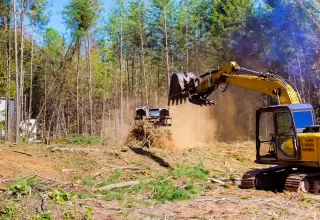
A wooded lot can feel like the perfect blank canvas—quiet, private, and naturally beautiful. But trees can also hide expensive realities like access challenges, clearing costs, and limited buildable areas. This guide will help you decide what to keep, what to remove, and when it makes sense to build around trees—especially in Gulf Coast conditions where storms, saturated soils, and fast-growing vegetation are part of the landscape.
Building on wooded land: start with a home placement plan
Before you fall in love with “all the trees,” start with the question that matters most: Where can the house realistically go? Your home placement is shaped by:
- Setbacks and easements
- Drainage patterns and low spots
- Driveway access and turnaround needs
- Septic area (if applicable) and reserve field location
- Utility runs (power, water, gas, internet)
- Soil stability and pad elevation
Once the home placement is mapped, you can decide which trees support your goals (shade/privacy) and which trees interfere with the build.
Keep, remove, or build around? A practical decision guide
When it makes sense to keep trees
Keep trees when they:
- Are healthy with strong structure (no major lean, rot, or dead canopy)
- Sit far enough from the planned foundation and roofline
- Provide useful shade without blocking airflow
- Create privacy buffers along roads or neighbors
- Don’t conflict with driveway, septic, or utility routes
Gulf Coast note: Shade is great—but humidity is real. Too much shade close to the home can slow drying after rain and encourage moss/mildew on hardscapes if airflow is restricted.
When you should remove trees
Remove trees when they:
- Are within falling distance of the future home, garage, or outdoor living areas
- Are dead/diseased, heavily leaning, or have structural damage
- Sit where the building pad, driveway, or utilities must go
- Would require excessive root cutting to “fit” the house
- Create drainage problems by blocking planned swales/flow paths
When building around trees is worth it
Building around trees can work when:
- You’re preserving a few signature trees (big live oaks, mature pines, etc.)
- The lot is large enough to shift the home without compromising layout
- The preserved trees won’t interfere with roof lines, solar, or gutters
- You can protect the root zones during construction (critical)
Clearing costs: what drives the price on wooded lots?
Clearing costs can range widely because every lot is different. The biggest cost drivers are:
- Tree density and diameter (bigger trees = more equipment/time)
- Underbrush thickness (vines, saplings, scrub)
- Stump removal vs. cut-and-leave (very different outcomes)
- Hauling and disposal (or burn regulations where allowed)
- Access for equipment (tight entrances slow everything down)
- Grading needs after clearing (especially in low or uneven areas)
Important: Some areas restrict burning or debris disposal—requirements vary by jurisdiction.
Mini table: Tree choices and tradeoffs
| Access Detail | Why It Matters | What It Can Affect |
|---|---|---|
| Culvert over ditch | Maintains drainage under driveway | Permits, erosion, driveway longevity |
| Driveway width & base | Supports heavy construction loads | Delivery access, ruts, schedule delays |
| Turnaround area | Prevents trucks backing long distances | Safety, neighbor relations, site damage |
Tree preservation basics (what “protecting trees” really means)
If you want tree preservation, it has to be planned—not improvised during framing week.
Key preservation principles
- Protect the root zone (roots often extend well past the canopy line)
- Keep heavy equipment out of protected areas (soil compaction kills trees slowly)
- Avoid cutting major roots for driveways or utilities
- Plan storage areas for lumber/rock away from preserved trees
- Choose which trees to keep before clearing begins
Reality check: The trees most likely to survive construction are those that are healthy, well-spaced, and not too close to the build zone.
Shade planning: comfort vs. maintenance vs. durability
Trees can reduce heat gain and improve outdoor comfort, but shade planning should consider:
- Roof and gutter performance: Leaf litter can clog gutters and cause overflow
- Moisture near the home: Dense shade may slow drying after rain
- Storm exposure: Mature trees can become hazards in high winds
- Outdoor living zones: Shade is great—falling limbs are not
A smart middle ground is often: preserve shade trees for yard comfort, but keep the immediate perimeter around the home clearer for airflow and reduced risk.
Checklist: What to verify before buying a wooded lot
Use this before you close—or at least before you finalize your home plan.
- Identify the likely building area and confirm setbacks/easements
- Walk the lot after a rain to find low spots and drainage direction
- Confirm driveway access and equipment entry space
- Estimate clearing costs based on the planned home footprint + driveway + utilities
- Decide your “must-keep” trees and mark them early
- Check for septic needs and space (plus reserve area, if required)
- Consider wind risk: remove dead/leaning trees near the build area
- Plan for shade intentionally (yard shade vs. too-close shade)
- Ask about any local rules or HOA restrictions—requirements vary by jurisdiction
- Budget for post-clearing grading and erosion control
Key Takeaways
- Building on wooded land can give you privacy and shade, but it can also limit home placement and increase site costs.
- Start with a home placement plan—then decide which trees support it.
- Selective clearing is often the best balance of beauty, budget, and buildability.
- Tree preservation only works if you protect root zones and plan equipment paths early.
- On the Gulf Coast, prioritize safety: remove weak trees near the home and plan shade with storms and humidity in mind.
FAQ: Building on wooded land
1) Is it cheaper to build on a wooded lot or a cleared lot?
Often, cleared lots are simpler and can reduce upfront site work. Wooded lots may add clearing and grading costs—but offer privacy and shade. It depends on density, access, and soil conditions.
2) Should I remove trees close to the house?
In many cases, yes—especially trees within falling distance of the home. Storm risk matters on the Gulf Coast, and weak trees near structures can be a hazard.
3) Can I keep big mature trees and still build nearby?
Sometimes, but it requires careful planning to protect roots and avoid soil compaction. Trees too close to excavation, utilities, or driveways are less likely to thrive long-term.
4) What’s the biggest mistake people make with wooded lots?
Falling in love with the trees before confirming the buildable area, driveway access, drainage, and septic/utilities layout.
5) How do clearing costs get estimated?
By the area to be cleared (home footprint + work zone), tree size/density, stump removal needs, access, and disposal requirements. Pricing varies widely by site.
6) Will a wooded lot make my yard wetter?
It can. Trees and underbrush can hide low spots and slow evaporation in dense shade. That’s why drainage observation after rain is so valuable.
7) Are there rules about removing trees?
Sometimes. Local ordinances, wetlands protections, and HOA/subdivision rules may apply—requirements vary by jurisdiction.
8) Can I design the home to preserve shade?
Yes. With early planning, you can orient living spaces and outdoor areas to benefit from shade while keeping the home perimeter safer and easier to maintain.