News
Value Engineering: Lower Cost Without Losing Quality
Learn about value engineering with tips on material swaps, layout efficiency, and spec choices.
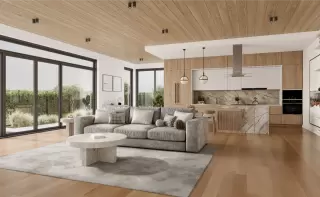
Value engineering isn’t “cheapening” a home—it’s making strategic decisions so your budget goes to the parts that truly impact comfort, durability, and long-term value. On the Gulf Coast, that means keeping an eye on moisture management, storm resilience, and material performance in heat and humidity. This guide shows practical ways to reduce cost while protecting quality and livability.
What Value Engineering Really Means (And What It Doesn’t)
Value engineering is a structured way to reduce cost without lowering the home’s overall performance. It asks: What’s driving cost, and are we paying for function—or paying for complexity?
Value engineering is:
- Optimizing the floor plan so square footage is used effectively
- Making smart spec choices that deliver the same durability and look for less
- Reducing labor-heavy details that don’t improve performance
- Simplifying construction (fewer corners, simpler rooflines, fewer custom transitions)
Value engineering is NOT:
- Cutting corners on code-required items or safety
- Downgrading critical components (structural, weatherproofing, drainage approach)
- Ignoring Gulf Coast realities like humidity, wind-driven rain, and seasonal storms
Gulf Coast note: Requirements vary by jurisdiction and site conditions (wind zones, flood zones, local codes, HOA rules). A good value engineering plan respects those constraints while finding savings elsewhere.
Where Cost Usually Hides in a Custom Home
Most budgets aren’t blown by one big decision—they’re blown by many small “extras” that compound.
Common cost drivers:
- Extra square footage (especially low-utility areas like oversized halls)
- Complex rooflines and lots of exterior corners
- Multiple plumbing “wet walls” spread across the plan
- Custom windows/doors sizes and too many unique openings
- High-end finishes in every room instead of “featured” spaces
- Last-minute changes after design and selections are underway
Value Engineering in the Floor Plan
Layout Efficiency: Get More House From the Same Square Footage
If you want the cleanest cost reduction without sacrificing quality, start with layout efficiency.
High-impact layout moves:
- Reduce hallway footage by tightening circulation and improving room adjacency
- Combine spaces that function better together (kitchen/pantry/laundry flow; mudroom drop zone)
- Right-size secondary spaces (guest rooms, bonus rooms, oversized foyers)
- Stack and align plumbing (kitchen, laundry, baths sharing walls where possible)
- Simplify the footprint (fewer bump-outs and jogs = lower framing, roofing, and exterior finish costs)
Mini Table: Layout Decisions That Often Save Money
| Decision | Why It Saves | Quality-Safe Alternative |
| Fewer exterior corners | Less framing + less exterior finish labor | Cleaner elevations + intentional trim details |
| Shorter hallways | Less “paid for” circulation space | Add built-ins or widen a key transition only |
| Group plumbing areas | Less pipe run + fewer penetrations | Place powder bath near laundry/kitchen core |
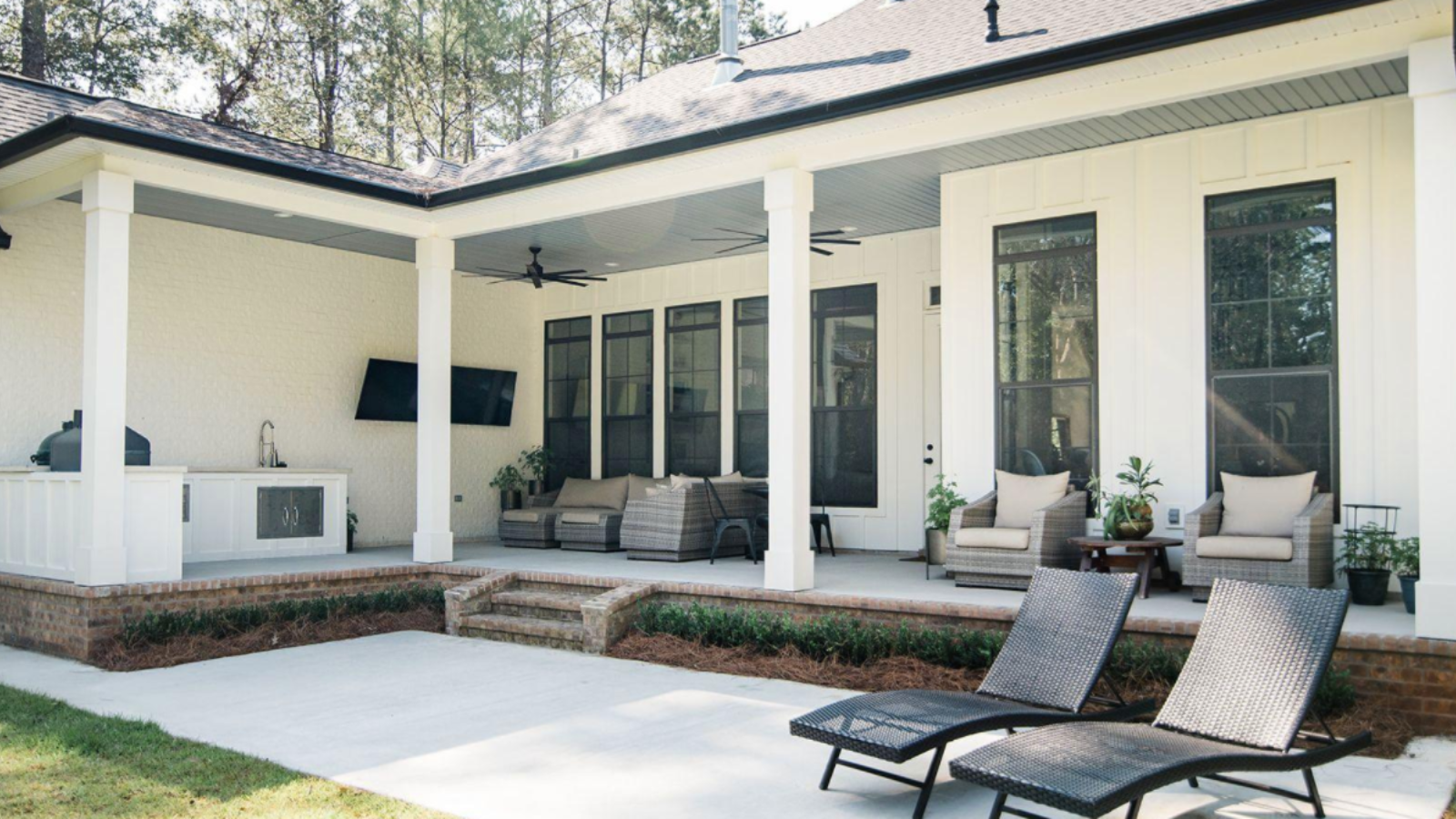
| Simpler roofline | Less framing/roofing complexity | Add curb appeal with porch details and materials |
Value Engineering in Specs and Materials
Material Swaps That Keep Performance (Especially on the Gulf Coast)
The goal with material swaps is not “lowest price.” It’s best value for durability, maintenance, and the look you want.
Smart swaps that often work well:
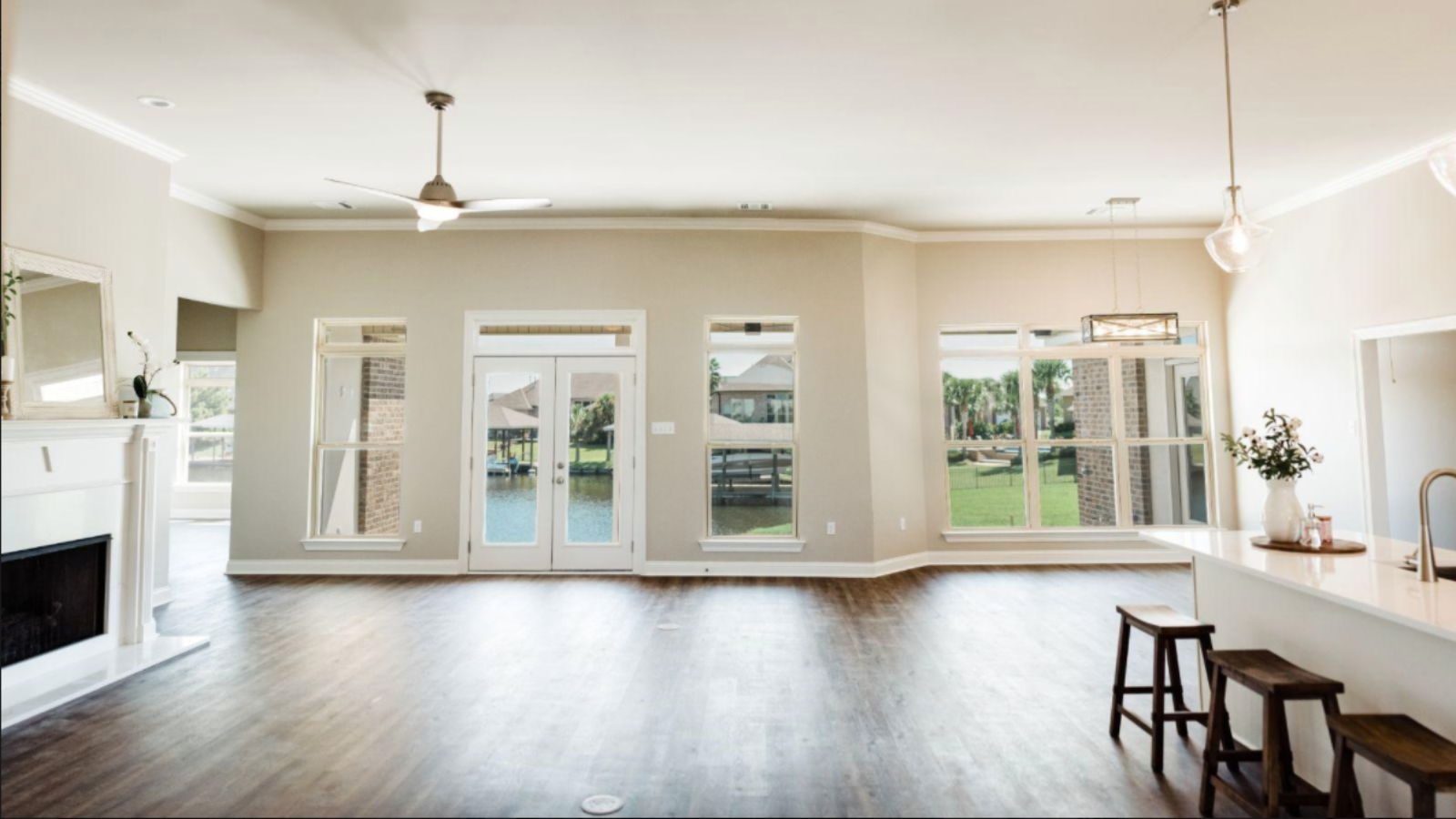
- Flooring: Use durable LVP in living areas and bedrooms; reserve tile for wet zones
- Countertops: Choose a strong “everyday” quartz level in most areas; upgrade only the island or primary bath
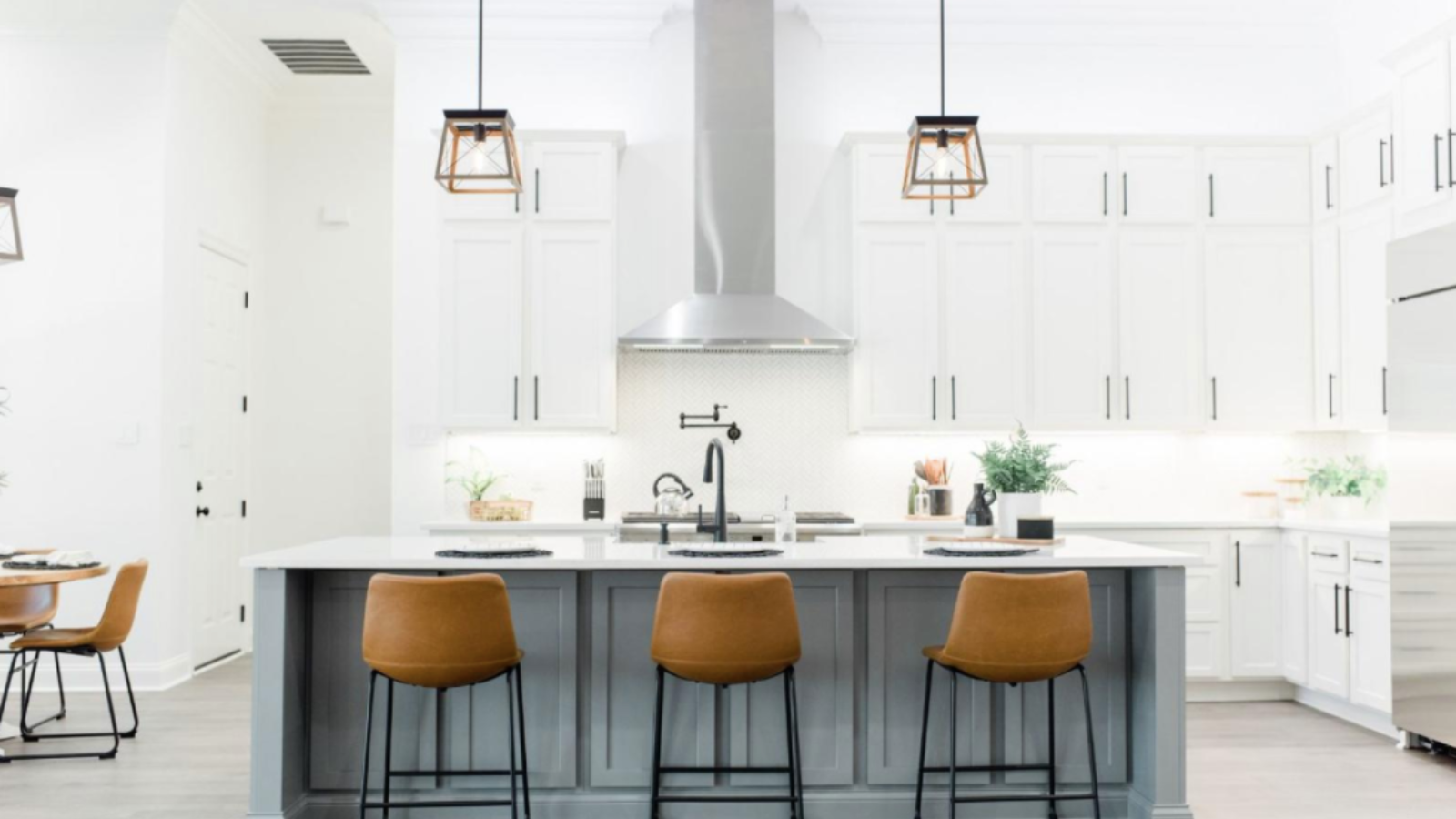
- Cabinets: Use a standard door style + add upgrades where people notice (hardware, lighting, hood detail)
- Exterior finishes: Mix materials strategically (stone/wainscot accents only on focal elevations)
- Fixtures: Pick a cohesive mid-tier spec package; avoid “one-off” specialty fixtures everywhere
- Windows/doors: Standard sizes and fewer unique units typically reduce cost without changing the feel
Gulf Coast performance priority: focus spend on moisture management details, proper flashing approaches, ventilation strategy, and material selections that tolerate humidity. Requirements vary by jurisdiction and site conditions.
Design Simplification That Doesn’t Feel “Basic”
Some of the biggest cost savings come from reducing labor-heavy complexity that doesn’t improve the way you live in the home.
Examples:
- Swap multiple tray ceilings for one feature ceiling in the main living area
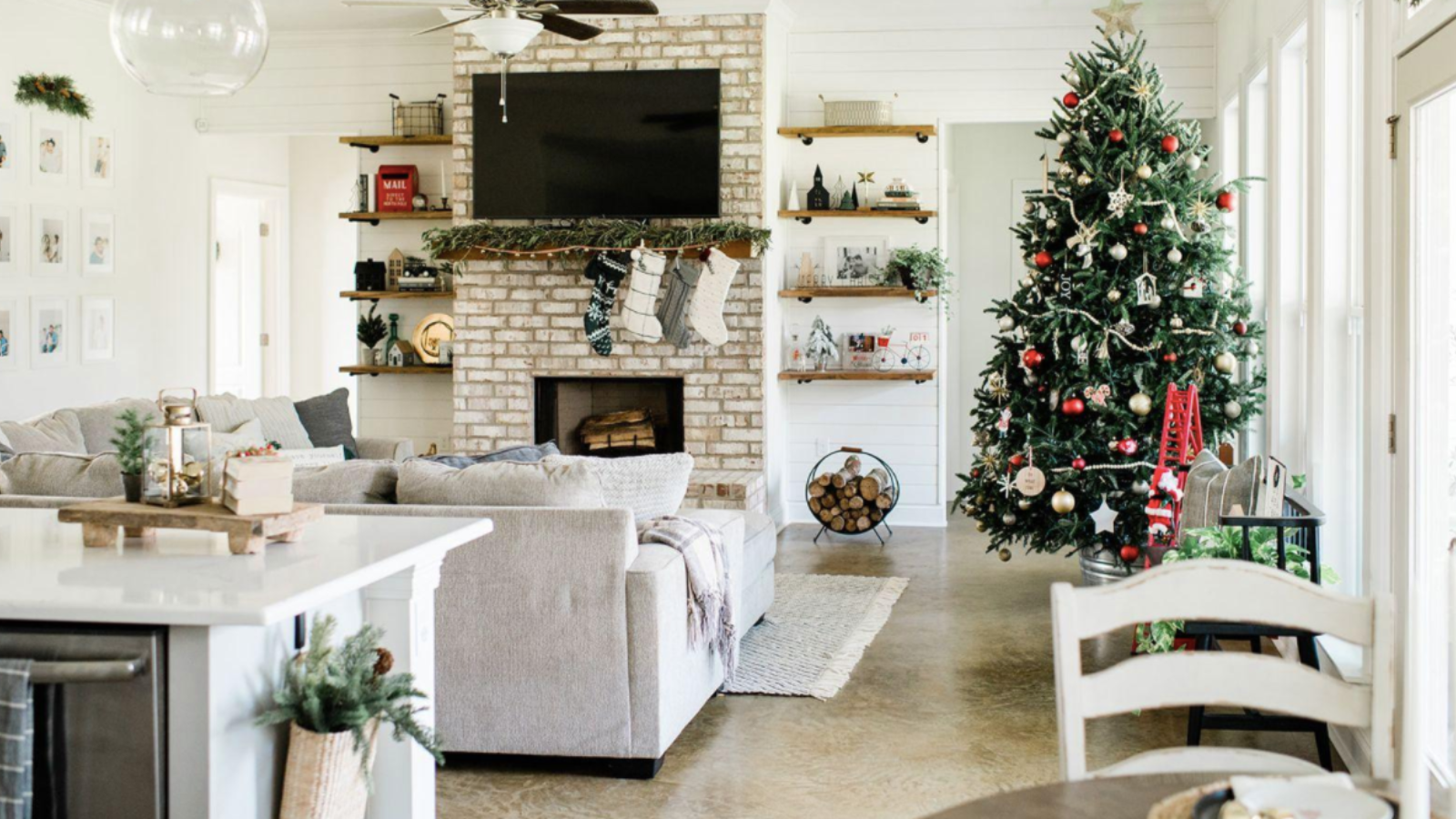
- Reduce custom built-ins and add one high-impact focal wall (fireplace surround, shelving, or trim)
- Use consistent interior door style and trim throughout (fewer transitions = cleaner look + lower labor)
- Minimize niche features (complex tile patterns, many shower niches, heavy decorative beams everywhere)
The “Keep / Swap / Cut” Budget Control Checklist
Use this checklist during pricing and selections to stay in control.
Value Engineering Checklist
Keep (don’t compromise):
- Structural integrity and site-specific requirements (varies by jurisdiction)
- Water management approach (grading/drainage plan, flashing, moisture control)
- HVAC design appropriate for climate (comfort + humidity control)
- Quality installation (labor and detailing matters)
Swap (best-value alternatives):
- Flooring material and scope
- Countertop tiers (upgrade only focal areas)
- Cabinet door style and finish packages
- Lighting and plumbing fixture packages
- Exterior material coverage (accent strategy)
Cut (often low-value cost drivers):
- Excess square footage with low everyday use
- Too many corners/bump-outs
- Overly complex rooflines
- Too many unique window/door sizes
- Repeated custom ceilings/details in every room
A Practical Value Engineering Workflow (How CTH Helps)
Value engineering works best when it’s a process, not a reaction.
- Start with priorities: What must the home do for your lifestyle and site?
- Price with clarity: Confirm what’s included in base specs and allowances (if applicable).
- Review the plan for efficiency: Identify wasted square footage and complexity.
- Make targeted spec choices: Spend where it impacts performance and daily joy.
- Lock decisions early: Late changes usually cost more than the change itself.
For a clear view of how decisions flow from design to build, review:
Want to explore layouts that naturally control cost? Start here:
Key Takeaways
- Value engineering is strategic cost reduction that protects performance and livability.
- The biggest savings often come from layout efficiency, not from “cheaper materials.”
- Material swaps should aim for equal durability/maintenance—especially in Gulf Coast humidity and storm seasons.
- Simplifying rooflines, corners, and “one-off” custom elements can reduce labor and complexity.
- Locking design and spec decisions early is one of the best forms of budget control.
FAQ: Value Engineering for Custom Homes
1) Is value engineering the same as cutting corners?
No. Value engineering reduces cost by improving efficiency and selecting better-value options—without sacrificing core performance.
2) When should value engineering happen?
As early as possible—during floor plan refinement and initial selections—before pricing is finalized.
3) What’s the #1 way to lower cost without losing quality?
Reduce wasted square footage and simplify the footprint. Layout efficiency often saves more than finish downgrades.
4) Are material swaps always a good idea?
They can be—if the alternative holds up to your climate and lifestyle. On the Gulf Coast, prioritize moisture tolerance and long-term maintenance.
5) What should I avoid value engineering on?
Anything tied to safety, structural integrity, or site-specific requirements. Requirements vary by jurisdiction, so keep it high-level and confirm locally.
6) Does a simpler roofline really save money?
Often yes. Fewer valleys, angles, and transitions can reduce framing/roofing labor and future maintenance risk.
7) Will value engineering make the home look less custom?
Not if it’s done intentionally. Many homes look more high-end when details are focused in key areas instead of spread everywhere.
8) How do I keep my budget from creeping up during selections?
Choose a cohesive spec package, limit one-off upgrades, and “feature” a few focal areas (kitchen, primary bath, main living) instead of upgrading everything.