News
Is Building a Custom Home More Expensive Than Buying?
Learn about build vs buy with tips on custom home cost, existing home tradeoffs, and maintenance.
Gulf Coast homes work harder than most—between humidity, heavy rains, sandy shoes, and year-round entertaining. This guide breaks down the top custom home features that make day-to-day living easier, protect your finishes, and help your home feel comfortable in every season. We’ll keep it practical, builder-minded, and tailored to the way people actually live across Louisiana, Mississippi, Florida, and Alabama.
Why Gulf Coast features matter
On the Gulf Coast, comfort and durability are tied to smart design. The right features can help you:
- Manage moisture (so your home feels crisp—not clammy)
- Keep dirt and water from traveling through the house
- Make entertaining easy without sacrificing private space
- Reduce maintenance with materials that hold up to real life
Note: Specific building requirements vary by jurisdiction and may depend on local codes, wind zones, flood zones, and permitting.
Top custom home features that fit Gulf Coast living (must-haves)
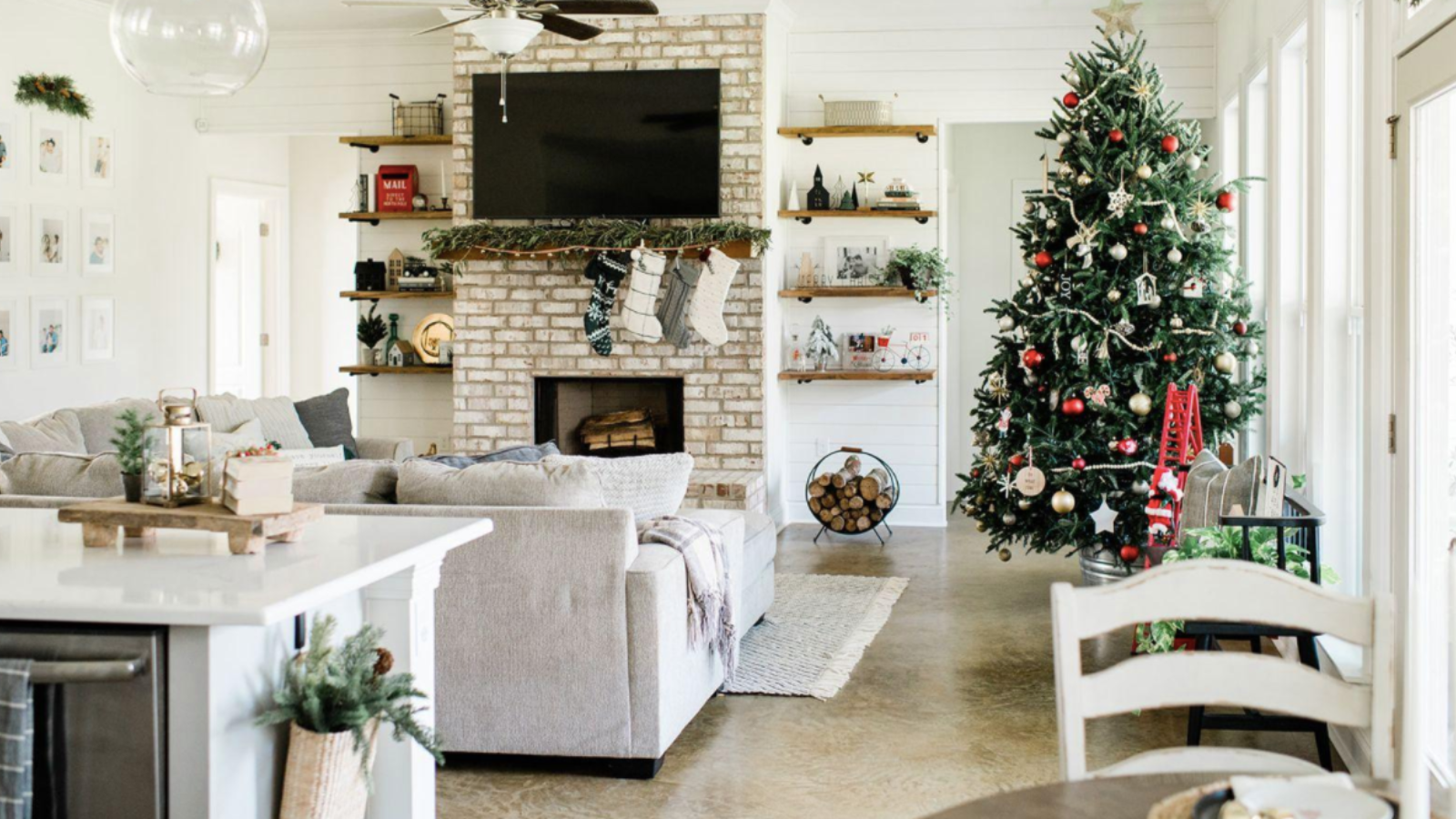
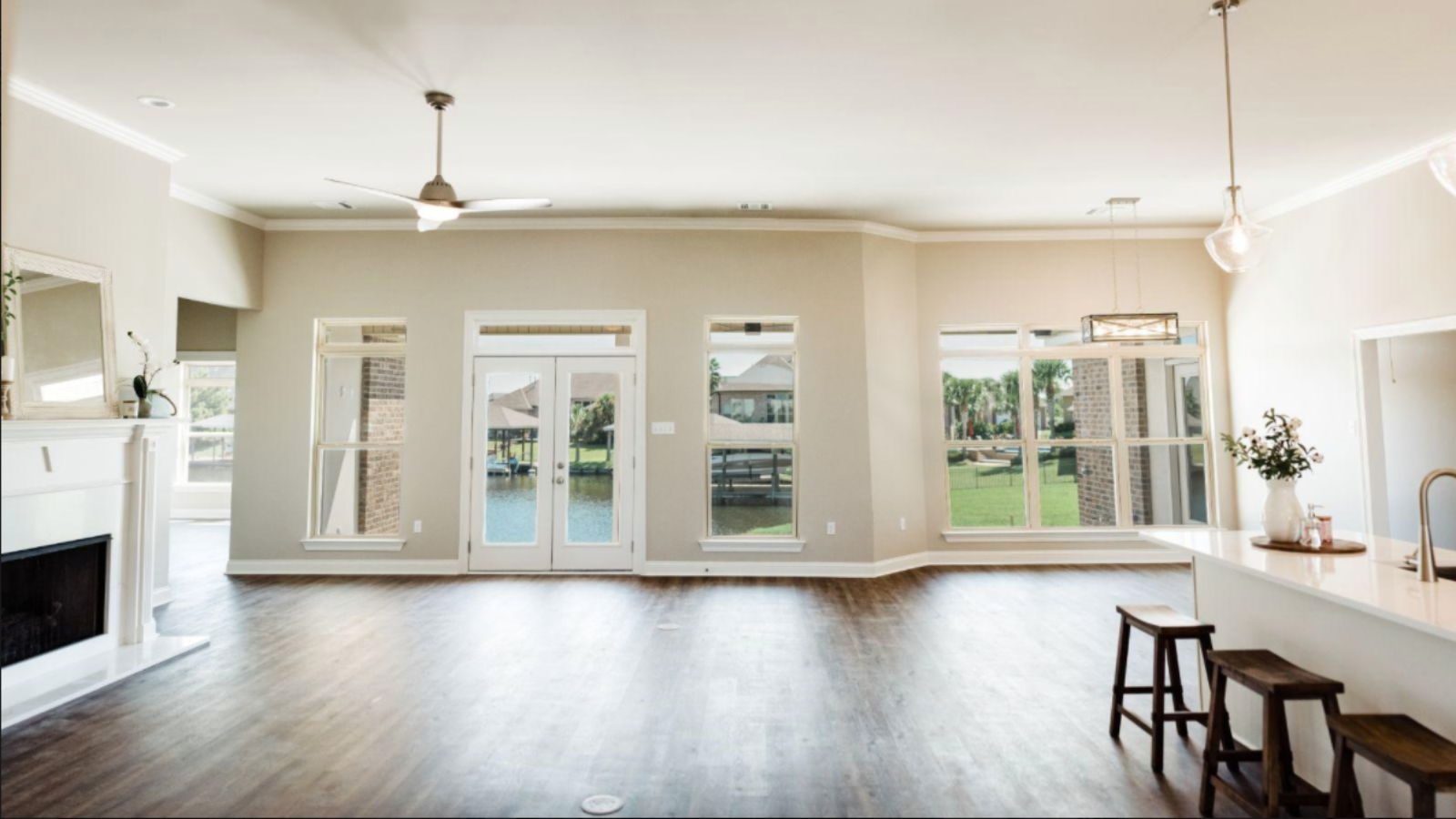
1) Open floor plan—with smart zoning
An open floor plan is a Gulf Coast favorite because it supports airflow, sightlines, and gatherings. The key is “open, but not echo-y.”
What to ask for:
- A defined kitchen-to-living connection (island seating, clear pathways)
- A tucked-away primary suite for quiet
- A flexible space (study/media room) that can close off with doors
- Furniture-friendly walls (so the TV doesn’t end up over a window)
Pro tip: Open layouts feel better when you design “zones” using ceiling treatments, lighting, and furniture placement—not random half-walls.
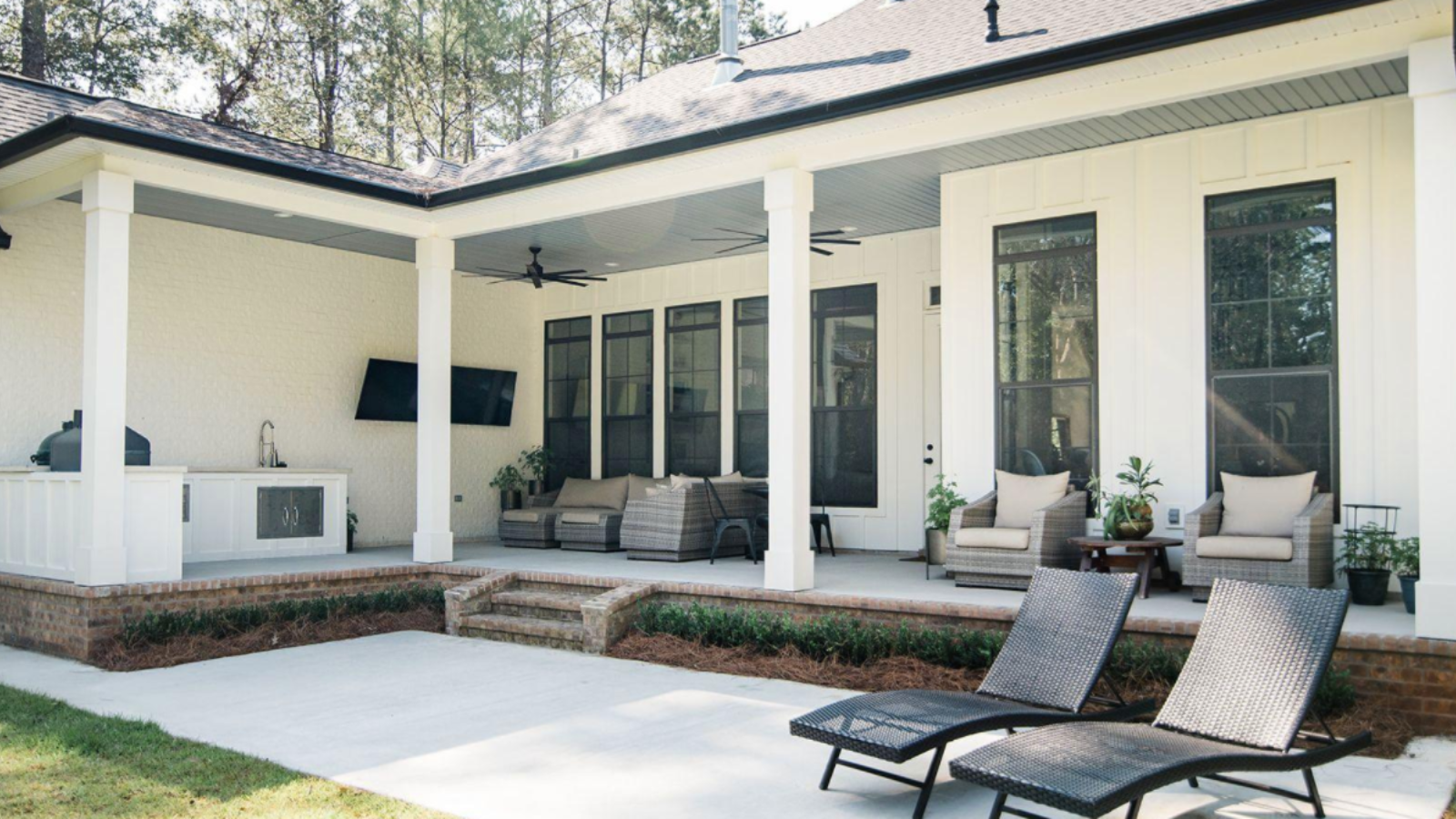
2) Porch living you’ll actually use
A covered porch isn’t just curb appeal on the Gulf Coast—it’s extra living space. Think of it like a second living room that can handle humidity and sunscreen.
Porch features that pay off:
- Deep roof cover (for shade and rain protection)
- Ceiling fans + outdoor-rated lighting
- Outdoor-rated flooring that’s easy to rinse and resists slickness
- Wide doors (or a multi-panel slider) for indoor/outdoor flow
3) Mudroom drop zone (the Gulf Coast “command center”)
A mudroom keeps wet shoes, sandy feet, sports gear, and backpacks from taking over the house.
Best mudroom add-ons:
- Bench + hooks at multiple heights
- Closed cabinetry for visual calm
- Durable flooring (easy to mop, not fussy)
- A “catch-all” counter for keys/mail
- Direct access from garage/carport and/or side entry
4) A real pantry (not a closet)
A functional pantry changes how your kitchen works—especially if you cook, host, or stock up for storms and busy seasons.
Two great pantry options:
- Walk-in pantry: more storage and easier organization
- Butler’s pantry: extra prep space, coffee station, hidden small appliances
Pantry details to prioritize:
- Adjustable shelving (deeper for bulk items)
- Space for countertop appliances
- Dedicated outlets (requirements vary by jurisdiction)
5) Laundry where it helps the workflow
Laundry placement matters more than people think.
Smart layouts:
- Near bedrooms (less hauling)
- Near the mudroom (for sports uniforms and dirty work clothes)
- With a sink and hanging space (great for humid climates)
6) Moisture-smart materials and easy-clean finishes
Humidity + real life = choose surfaces that can take it.
Common-sense finish choices:
- Flooring that handles water and traffic (ask your builder what they recommend for your lifestyle)
- Washable wall paint in high-use areas
- Moisture-resistant details in baths and laundry areas
- Hardware and fixtures that resist corrosion (especially near the coast)
7) Storage that prevents clutter creep
The Gulf Coast lifestyle comes with gear: coolers, fishing stuff, beach chairs, sports equipment, holiday décor.
Storage features people love later:
- A dedicated owner’s closet
- A linen cabinet near bedrooms
- Oversized hall closets
- Garage/shop storage planning (shelving zones, tool wall)
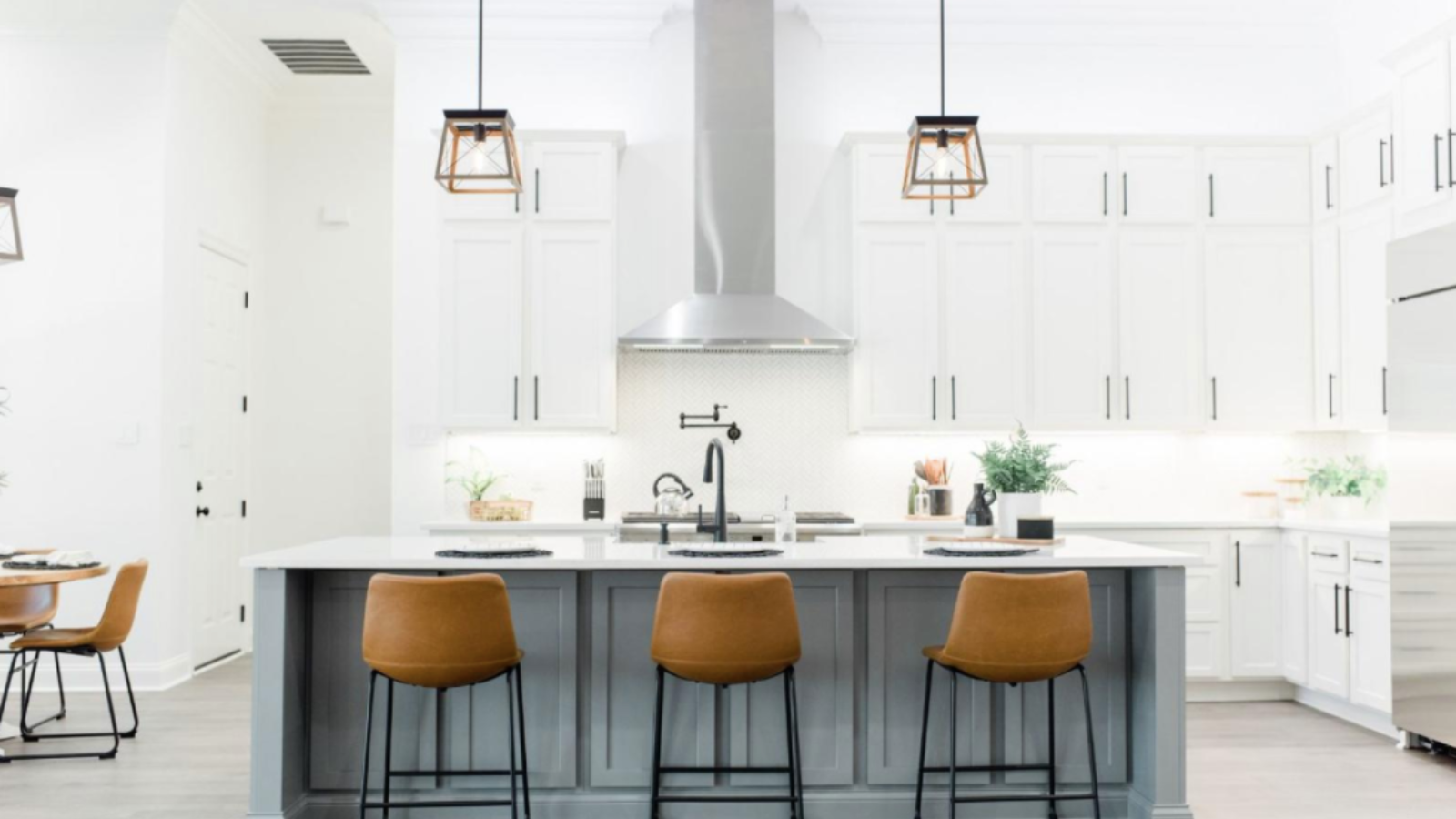
8) Kitchen features built for entertaining
Entertaining is a Gulf Coast sport. Your kitchen should support it.
High-impact entertaining features:
- Big island with seating + power (requirements vary by jurisdiction)
- Clear path from fridge → sink → range
- Beverage station (coffee/water/wine fridge area)
- Dining space that fits your real guest count
Quick comparison table: Feature vs. why it works on the Gulf Coast
| Feature | Why it helps in heat/humidity + entertaining | Where it matters most |
|---|---|---|
|
Open floor plan |
Better flow for gatherings; flexible daily living |
Kitchen + living |
|
Covered porch |
Shade + rain cover; adds usable living space |
Front/rear outdoor areas |
|
Mudroom |
Contains wet/sandy mess and clutter |
Entry from garage/side door |
|
Walk-in pantry |
Easier bulk storage and hosting prep |
Kitchen |
Checklist: “Gulf Coast-ready” feature planning
Use this when you’re finalizing a floor plan and selections:
- Open floor plan with defined zones (living/dining/kitchen)
- Covered porch sized for furniture + fans
- Mudroom with bench/hooks + closed storage
- Pantry with adjustable shelving and appliance space
- Laundry placed for your real routine (bedrooms/mudroom access)
- Easy-clean flooring in high-traffic and wet areas
- Storage for seasonal gear (owner’s closet, linen, garage planning)
- Kitchen layout that supports entertaining (island + serving flow)
How to choose features without overbuilding
Match features to how you live
Ask yourself:
- Do we host big gatherings—or just family dinners?
- Do we need a quiet work-from-home room?
- What messes up our current house the most? (shoes, backpacks, dog towels, groceries)
Spend where you feel it every day
The best ROI isn’t always resale—it’s daily convenience:
- Mudroom + pantry + laundry layout often “feel” more valuable than flashy upgrades.
- Porch design can add year-round enjoyment if it’s sized and shaded correctly.
Key Takeaways
- Gulf Coast design is about comfort, durability, and easy maintenance—not just looks.
- The best custom home features support humidity control, mess containment, and entertaining flow.
- An open floor plan works best when it’s zoned for quiet and HVAC balance.
- A covered porch becomes real living space when it’s deep, shaded, and fan-ready.
- A smart mudroom and functional pantry are everyday upgrades you’ll feel immediately.
FAQ
1) What are the most important custom home features for Gulf Coast living?
Prioritize moisture-smart materials, a covered porch, a functional mudroom, a real pantry, and a layout that supports airflow and entertaining.
2) Is an open floor plan a good idea in a hot, humid climate?
Yes—an open floor plan can feel bright and breezy, especially when it’s designed with clear zones and smart HVAC planning.
3) How big should a porch be to actually use it?
Big enough for furniture you’ll sit on. Many homeowners prefer space for a table or seating group plus walking clearance—your builder can help size it to your plan.
4) What should a Gulf Coast mudroom include?
At minimum: a bench, hooks, durable flooring, and closed storage. If you can, add a counter and space for bags, pet towels, or a small utility sink (requirements vary by jurisdiction).
5) Walk-in pantry or butler’s pantry—which is better?
Walk-in pantries maximize storage. Butler’s pantries add prep space and hide appliances. The best choice depends on how you cook and host.
6) What materials hold up best to Gulf Coast humidity?
Look for finishes that are easy to clean and designed for moisture-prone areas. Your builder can recommend flooring, paint sheens, and bath/laundry details that perform well.
7) Should I plan extra storage in a custom home?
Yes—Gulf Coast living often means more gear (outdoor, sports, storm-season supplies). Dedicated closets and garage storage planning reduce clutter fast.
8) How do I keep entertaining from taking over the whole house?
Use zoning: keep gathering areas open, but include at least one closable flex room and a private primary suite location.