News
Kitchen Layouts That Work: Island, Peninsula, or Galley?
Learn about kitchen layout with tips on kitchen island workflow, storage planning, and seating.

Picking a kitchen layout is one of the most important design decisions in a custom home—because it affects your daily workflow, storage, and how your home feels when family and friends gather. On the Gulf Coast, we also think about real-life use: sandy feet from the patio, big weekend boils, humidity, and busy households moving in and out. Below is a practical way to compare an island, peninsula, and galley so you can choose a kitchen layout that truly fits how you live.
How to Choose the Right Kitchen Layout (Fast Framework)
Before you pick island vs. peninsula vs. galley, answer these four questions:
- How many cooks are usually in the kitchen? (1, 2, or a crowd?)
- Where does traffic flow? (Front door → kitchen → living, garage → pantry, patio → sink, etc.)
- What matters most: seating, storage, or speed?
- Do you want the kitchen to be a “destination” or a “work zone”?
The 5 Core Zones Every Great Kitchen Needs
No matter the layout, plan these zones intentionally:
- Prep zone (near sink + trash)
- Cooking zone (range + landing space)
- Clean-up zone (sink + dishwasher + dishes)
- Storage zone (pantry + everyday items)
- Serving zone (counter space for plating/hosting)
Kitchen Layout Basics: Clearances That Make Workflow Work
A kitchen can look amazing—and still feel frustrating if the clearances are off. While requirements vary by jurisdiction and design, these rules of thumb help:
- Main walkways: aim for comfortable passing space (especially if two people cook).
- Appliance doors: plan so the fridge, dishwasher, and oven doors don’t crash into traffic paths.
- Landing zones: leave counter space next to the fridge, sink, and range so you’re not juggling hot pans.
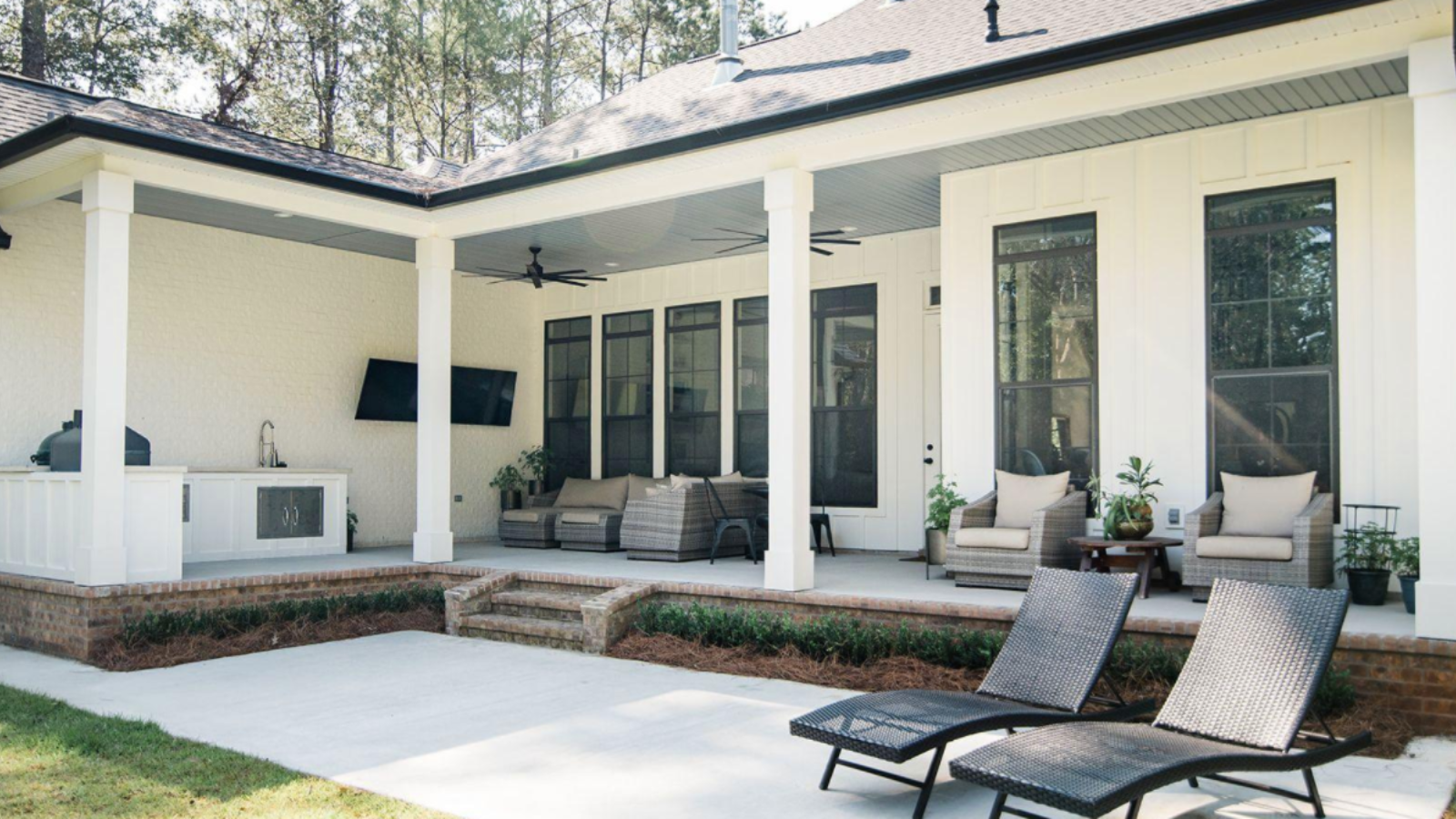
Gulf Coast tip: If you entertain outdoors (patio, porch, outdoor kitchen), think about a “wet path” from outside to the sink area—so the kitchen handles outdoor traffic without clogging your cooking workflow.
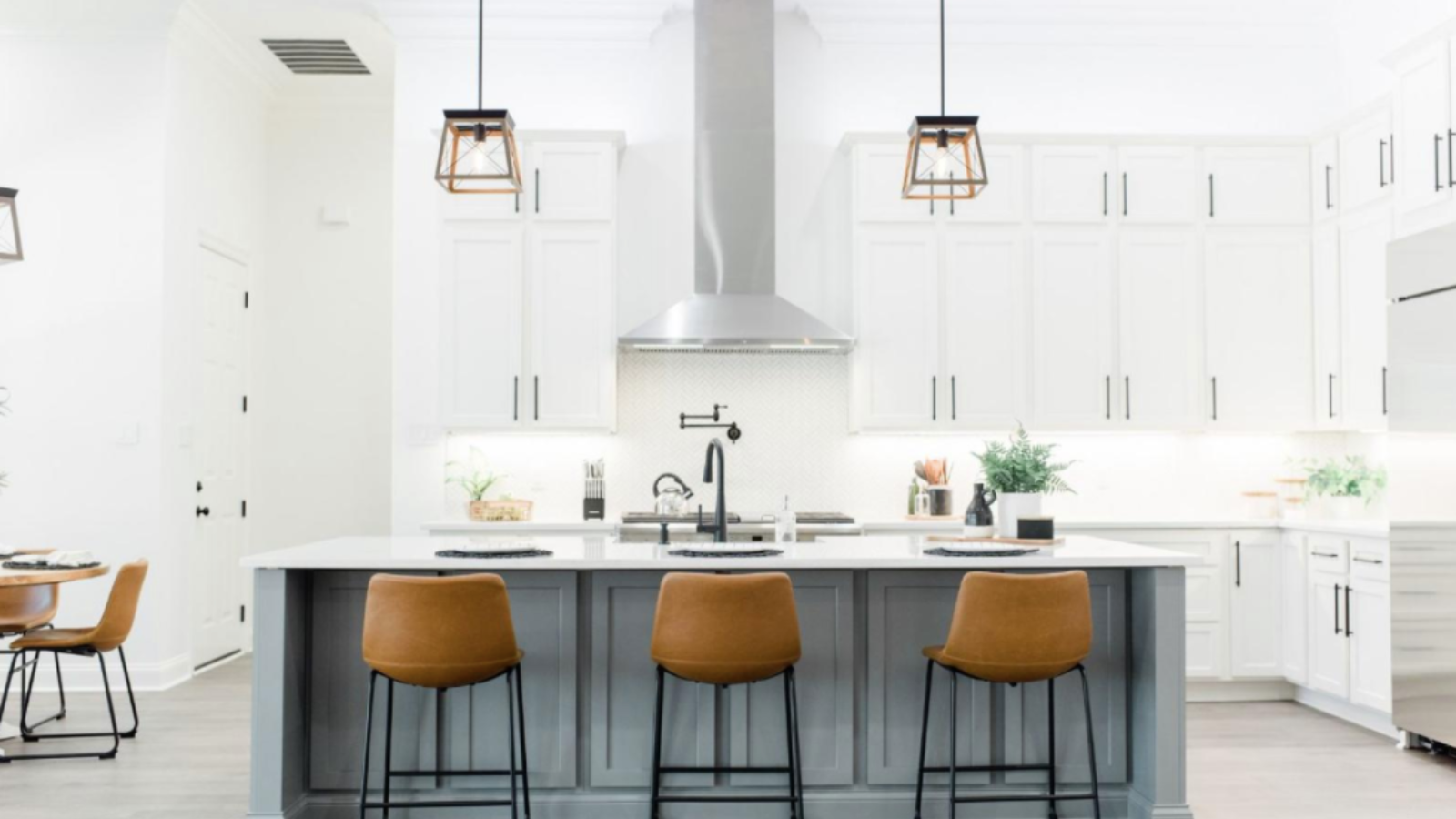
Island Kitchen Layout: Best for Seating + Social Cooking
A kitchen island is often the dream—extra counter space, storage, and that “everyone gathers here” feel.
Best for
- Hosting and everyday hanging out
- Larger open-concept homes
- Homes that need extra seating without a huge dining table
Watch-outs
- Islands need enough room around them to keep workflow smooth.
- If the island blocks the path to the pantry or fridge, it can create daily frustration.
Island layout design tips (practical)
- Put prep space on the island if your sink/range relationship supports it.
- Include deep drawers for pots/pans—drawer storage is often more usable than lower cabinets.
- Consider seating placement so stools don’t block the main walkway.
Peninsula Kitchen Layout: The “Best of Both Worlds” for Many Homes
A peninsula is basically an attached island—great when you want the benefits of an island but the footprint won’t cooperate.
Best for
- Medium-size kitchens
- Families who want seating but need tighter traffic control
- Creating a subtle separation between kitchen and living areas
Why peninsulas often work so well
- They add storage and counter space without needing full 360° clearance.
- They can guide traffic away from the cook zone (huge win for day-to-day function).
Peninsula layout pro move
Use the peninsula to define your serving zone—a great spot for buffet-style meals, homework, or setting out snacks while the cook keeps working.
Galley Kitchen Layout: The Efficiency Champion
Galley kitchens have two parallel runs (or one run plus a tall wall), and they’re famous for tight, efficient workflow.
Best for
- Serious cooking
- Narrow or smaller footprints
- Adding lots of cabinetry and organized storage
Watch-outs
- Two-way traffic can get cramped if the aisle is too tight.
- Galley kitchens can feel closed off—unless you add good lighting and smart openings.
Galley layout upgrades that matter
- Go to the ceiling with cabinets for storage (great for seasonal items).
- Add under-cabinet lighting to brighten work surfaces.
- Use pull-outs (trash, spice, trays) to maximize function.
Quick Comparison Table: Island vs. Peninsula vs. Galley
| Layout Type | Best For | Biggest Risk |
|---|---|---|
|
Island |
Seating, entertaining, open-concept living |
Poor clearances can hurt workflow |
|
Peninsula |
Extra counter + seating in tighter spaces |
Can create bottlenecks if placed wrong |
|
Galley |
Fast cooking workflow + high storage |
Traffic jams in a narrow aisle |
Checklist: Pick the Kitchen Layout That Fits Your Life
Use this checklist before finalizing plans:
- We mapped our traffic paths (garage → pantry, patio → sink, etc.).
- The fridge door can open without blocking a walkway.
- There’s a clear prep zone near the sink and trash.
- We have a real plan for storage (pantry, small appliances, pots/pans).
- Seating won’t block the main walk path during busy times.
- We included landing space near the range and fridge.
- We planned where coffee/breakfast happens so it doesn’t interrupt cooking.
- Our layout supports at least 2 people moving without constant “excuse me.”
Storage + Seating: The Two Layout Deciders
If you’re stuck between options, decide based on these two realities:
Storage reality
- Islands can add great drawer storage, but only if you don’t sacrifice circulation space.
- Peninsulas often create more usable lower-cabinet storage than a cramped island.
- Galleys usually win on pure cabinet volume.
Seating reality
- Islands typically offer the best “gathering” seating.
- Peninsulas provide seating with more controlled traffic.
- Galleys usually shift seating to a breakfast nook or nearby dining space.
Key Takeaways
- A great kitchen layout starts with traffic flow, not trends.
- Choose an island when you have enough space for clear walkways and want maximum seating.
- Choose a peninsula when you want seating + storage but need better traffic control.
- Choose a galley when cooking efficiency and storage matter most.
- Plan the five zones (prep, cook, clean, store, serve) and your workflow will feel effortless.
FAQ: Kitchen Layouts (Island, Peninsula, Galley)
1) What kitchen layout is best for entertaining?
Most of the time, an island kitchen layout is best for entertaining because it creates seating and a natural gathering spot—assuming you have enough clearance for smooth workflow.
2) Is a peninsula better than an island in a smaller kitchen?
Often, yes. A peninsula can give you extra counter space, storage, and seating without needing as much open space around it.
3) Are galley kitchens outdated?
No. A galley can be one of the most functional layouts for cooking and storage. With good lighting, finishes, and thoughtful openings, it can feel modern and open.
4) How do I avoid a kitchen that feels crowded?
Focus on clear traffic paths, avoid placing seating where it blocks walkways, and make sure appliance doors don’t collide. If space is tight, a peninsula or galley may outperform a forced island.
5) Where should the sink go in an island layout?
It depends on your workflow and plumbing plan, but many homeowners like a sink that supports the prep zone and clean-up zone. If it’s on the island, plan for trash, dishwasher access, and clutter control.
6) What layout is best for storage?
A galley often wins for total cabinet space. A well-designed peninsula can also add strong storage. Islands are excellent for drawer storage—if the kitchen is large enough.
7) How does Gulf Coast living affect kitchen layout choices?
Outdoor living is a big factor. Many Gulf Coast homes benefit from a layout that supports traffic from patio/outdoor cooking areas to the sink and serving zones—without disrupting the cook’s workflow.
8) Should I prioritize seating or storage?
If your family gathers in the kitchen daily, seating may matter more. If you cook often or need appliance/pantry organization, storage might be the better priority. The best kitchen layout balances both.